
The insights come at a time when universities are facing increased pressure on international recruitment, as highlighted in our recent article on UK visa changes. This makes conversion and engagement more important than ever.
Engagement drives enrolment
One of the most striking insights from the session was the impact of reciprocal engagement. According to the data shared, admitted students who actively engage with institutions are three times more likely to enrol than those who do not.
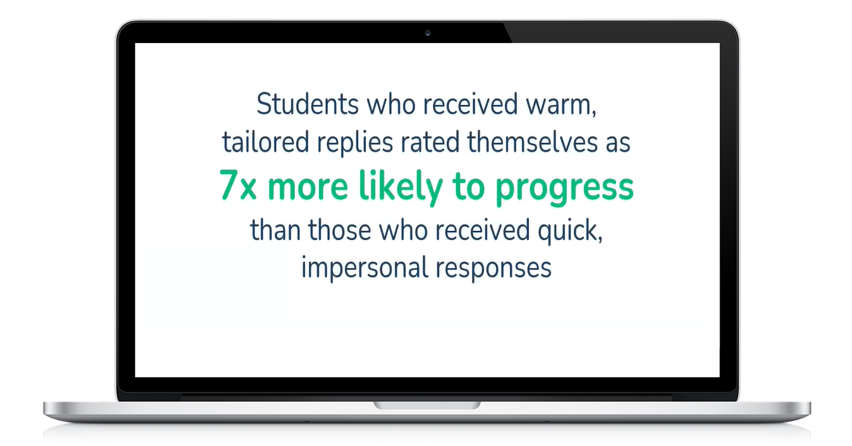
Personalised communication also plays a critical role. Students who receive warm, tailored responses from universities are seven times more likely to progress in the admissions process than those who receive quick but impersonal replies. The findings suggest that responsiveness alone is not enough. Institutions must ensure communication feels relevant and personal if they want to maintain momentum through the recruitment funnel.
Mapping the real student journey
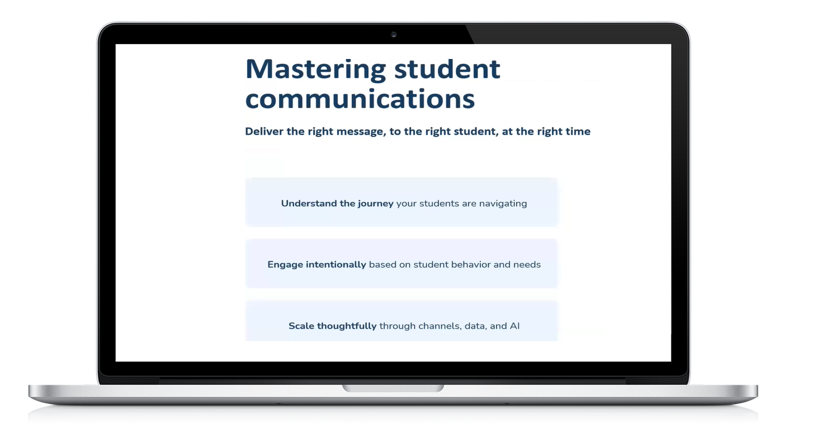
Improving communication starts with understanding how students actually move through the admissions process. Universities were encouraged to map the real student journey, rather than relying on internal assumptions about how the process works. Process mapping can reveal where students encounter friction, such as confusing application steps, poorly sequenced tasks or additional requirements that add effort without improving the experience. Identifying these barriers allows institutions to streamline processes and improve conversion.
Segmentation enables more relevant messaging
Another key recommendation was the use of segmentation to better tailor communications. Rather than treating prospective students as a single audience, institutions should identify groups whose motivations and needs differ significantly. Segmentation can be based on factors such as programme interest, study level, lead source or stage in the application process. Delivering the right information at each stage can help maintain engagement, whether that means explaining programme options to early prospects, guiding applicants through document submission or supporting admitted students with visas and arrival preparation.
Choosing channels strategically
The masterclass also stressed the importance of selecting communication channels carefully. Universities do not need to be present everywhere, but should prioritise the platforms they can manage reliably. Research presented in the session showed that students contacted through a mix of one-to-one channels, such as messaging or phone calls alongside email, convert to enrolment at double the rate of those who receive email communication alone. The key takeaway, Prettyman argued, is that effective recruitment communication requires institutions to move beyond generic outreach and focus instead on personalised engagement, strategic channel use and a deeper understanding of the student journey.
HL thought: communication is now a competitive advantage
As international recruitment becomes more competitive, communication is no longer just operational – it’s strategic.
Universities that prioritise personalised, two-way engagement will be better placed to convert interest into enrolment, while those relying on generic outreach risk falling behind.
Get in touch to see how we can help: kim.mclellan@hunterlodge.co.uk