
Every year, Keystone Education Group’s State of Student Recruitment report provides an interesting snapshot of how prospective students are thinking about higher education. This year’s report, based on insights from more than 67,000 students across 150 countries, reveals how students are becoming increasingly pragmatic in their decision-making.
The findings also arrive at a significant moment for UK higher education. Recent proposals reported by The Independent suggest universities could face sanctions if too many international students are found to be misusing study visas or later claiming asylum in the UK. At a time when governments are paying closer attention to immigration and students are placing greater emphasis on post-study opportunities and long-term return on investment, understanding what drives international decision-making has never been more important.
Here are some of the trends that stood out.
Students are looking beyond the traditional destinations
While the UK remains the most popular intended study destination, the report shows growing interest in a wider range of countries. Germany, Italy and Ireland continue to attract attention, while India enters Keystone’s top ten destinations for the first time.
This points to a more competitive international recruitment landscape, where students are evaluating destinations more holistically than ever before. Reputation still matters, but it is no longer enough on its own. Students are weighing up affordability, visa pathways, safety, post-study opportunities and overall value when deciding where to study.
For universities operating in increasingly competitive markets, destination appeal can no longer be taken for granted.
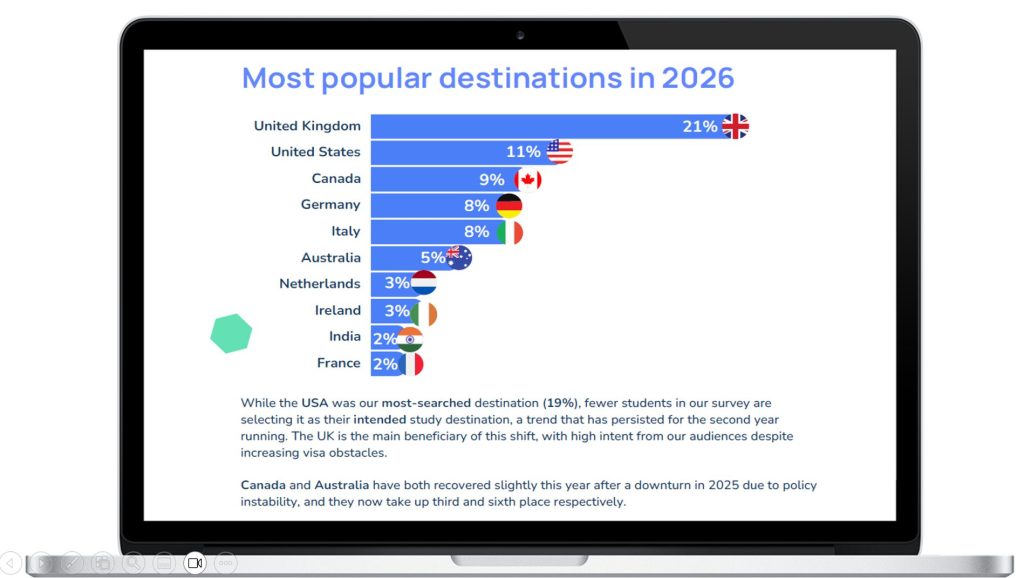
Keystone Report – International student interest is becoming more diverse, with European destinations now accounting for 45% of total interest and India entering Keystone’s top ten destinations for the first time.
The value conversation is getting louder
Perhaps the most significant takeaway from the report is the increasing emphasis on return on investment.
When students were asked what influences their study decisions, cost, graduate outcomes and internship opportunities all ranked higher than traditional measures such as rankings and institutional heritage.
That’s not to say reputation no longer matters. Rather, students appear to be asking a different question. Instead of simply wanting to know which university is best, they’re asking what a degree will help them achieve in the years after graduation.
It’s a trend we’re already seeing reflected across the sector. Recently, the BBC reported that the University of Manchester announced plans to offer work placements to all undergraduates, recognising the growing importance of employability and graduate outcomes in student decision-making.
For marketers, this means highlighting outcomes as much as reputation. Graduate destinations, employer partnerships, placements, internships and alumni success stories all help answer the questions students are increasingly asking.
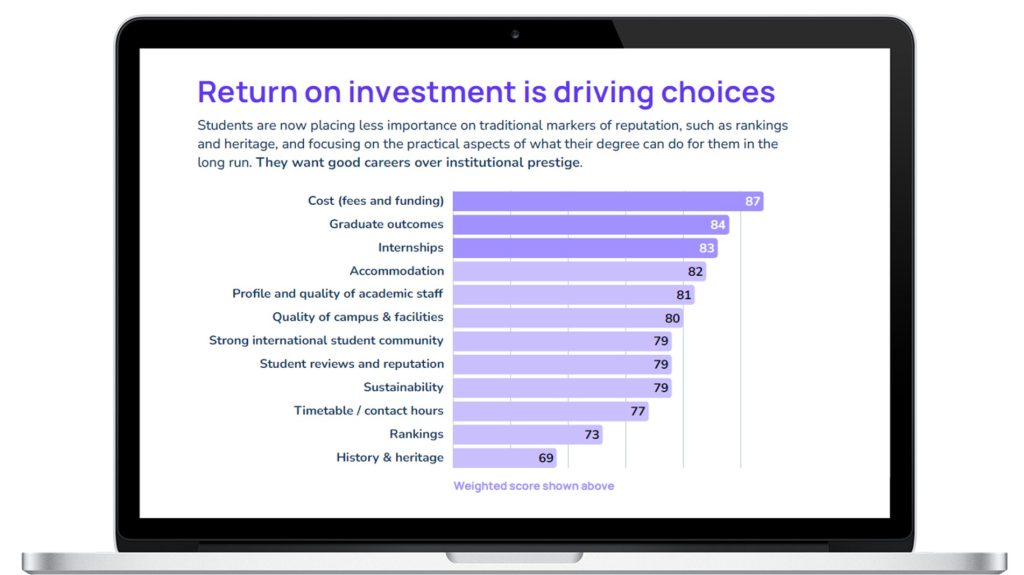
Keystone Report: Cost, graduate outcomes and internships are among the most important factors influencing student choice, outperforming traditional measures such as rankings and institutional heritage.
Flexibility is becoming part of the student proposition
The report also highlights changing attitudes towards where and how students study.
The rise of transnational education, international branch campuses and flexible delivery models means students have more options than ever before. We’re already seeing institutions respond to this demand. The University of Southampton recently became the first international institution to open a fully operational branch campus in India (Delhi), while several other UK universities, including York and Aberdeen, have announced plans to establish a presence in the country.
For some students, international education is no longer an either-or decision. It is becoming possible to access a global qualification through multiple routes, whether that’s studying overseas, through a branch campus, or via a partnership closer to home.
As these opportunities continue to grow, universities may need to think more carefully about how they position the value of different study experiences and pathways.
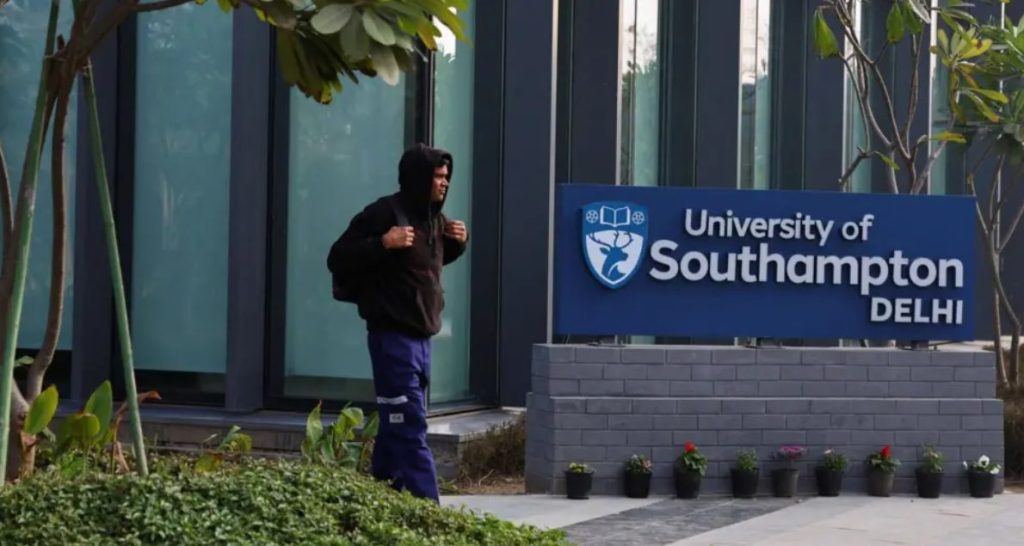
The University of Southampton was the first international institution to open a fully operational branch campus in India.
AI is changing behaviour, but trust still matters
One of the more interesting findings from the report is the gap between AI usage and trust.
Students are increasingly using AI tools to research study options, but when it comes to making decisions, university websites remain one of the most trusted sources of information.
For universities, this is reassuring. While AI may be changing how students discover information, it hasn’t replaced the need for accurate, trustworthy and engaging institutional content.
In many ways, it reinforces the importance of getting the basics right. Clear course information, transparent admissions guidance, strong student stories and regularly updated content remain central to the decision-making process.
What should universities take from this?
The picture emerging from this year’s report is of a student audience that is cautious and increasingly focused on long-term outcomes.
Students are taking longer to make decisions, comparing more destinations and placing greater scrutiny on the value of their investment.
At the same time, changes to immigration and visa policies are making study destinations more difficult to compare and evaluate.
For universities, the challenge isn’t necessarily to change what they offer, but to become better at demonstrating the value of that offer.
As competition between destinations intensifies, institutions that can clearly communicate employability, flexibility, student support and long-term outcomes are likely to be best placed to attract the next generation of international students.